
Does Virtual Staging Work When Selling a Home?
When you’re selling a vacant home, empty rooms don’t always photograph well. Without furniture, buyers may have difficulty judging the size of a room or imagining how the space could be used.
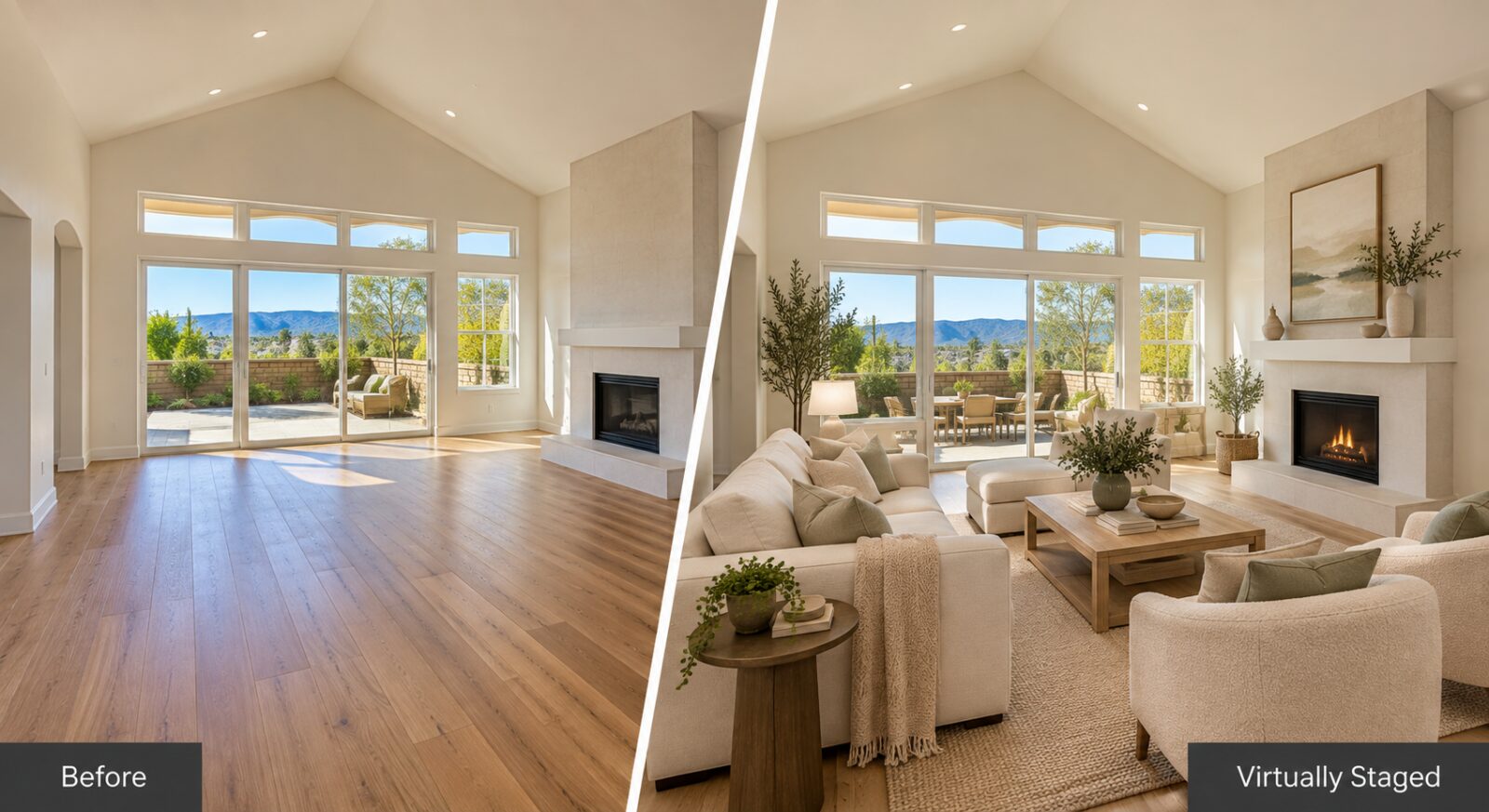
Virtual staging offers another option. Furniture and décor are digitally added to photographs of empty rooms, giving buyers a better sense of how the home might look furnished without physically staging the property.
It can be a useful marketing tool, but it isn’t the right choice for every home.
What Is Virtual Staging?
Virtual staging starts with photographs of the actual property. Furniture, artwork, rugs and other decorative elements are then digitally added to the images.
Unlike traditional staging, no furniture is physically brought into the home. The property remains vacant, but the listing photographs show buyers one possible way the rooms could be furnished.
The goal isn’t to make the home look like something it isn’t. It’s to help buyers visualize the potential of an empty space.
When Virtual Staging Can Work Well
I think virtual staging can be particularly helpful when a home is completely vacant.
Empty rooms can sometimes appear smaller in photographs because there’s nothing to provide scale. In other cases, buyers may have trouble determining where a dining table would fit or whether a bedroom could comfortably accommodate a particular furniture arrangement.
Thoughtful virtual staging can provide that context.
It may also be useful when physically staging an entire property doesn’t make financial sense but certain rooms would benefit from some visual help.
Virtual Staging vs. Traditional Staging
Virtual and traditional staging solve different problems.
Traditional staging changes what a buyer actually experiences when walking through the home. Furniture placement can improve flow, define spaces and create a more inviting atmosphere both online and in person.
Virtual staging changes the photographs, not the property.
A virtually staged living room may look beautiful online, but when buyers arrive for a showing, they’re still walking into an empty room.
That’s an important distinction.
For some homes, physical staging is worth the investment. For others, virtual staging may provide enough visual context for the online marketing.
Sometimes a combination makes sense, such as physically staging the main living areas while using virtual staging selectively elsewhere.
Virtual Staging Should Look Realistic
Bad virtual staging can do more harm than good.
Furniture that’s obviously computer-generated, incorrectly scaled or inconsistent with the architecture can make buyers focus on the editing rather than the home.
The best virtual staging should feel believable.
Furniture should fit naturally within the room, the proportions should make sense, and the design should complement the property rather than overwhelm it.
Don’t Use Virtual Staging to Hide Problems
This is where I draw a very clear line.
Virtual staging should help buyers visualize a room, not misrepresent the property.
I wouldn’t use it to digitally remove permanent features, disguise damage, change views, make a room appear larger or otherwise create an inaccurate impression of what a buyer will actually see.
Transparency matters.
When virtually staged photographs are used, they should be clearly identified so buyers understand that the furniture and décor shown in the image aren’t physically present in the home.
What About AI-Generated Staging?
AI has made virtual staging faster and easier, but that doesn’t necessarily make every AI-generated image suitable for real estate marketing.
AI tools can occasionally alter architectural details, windows, doors, fireplaces or other permanent elements without making the changes obvious.
That’s a problem.
Any virtually staged image should be carefully compared with the original photograph before it’s used in marketing. The home itself needs to remain accurately represented.
Is Virtual Staging Cheaper Than Traditional Staging?
Generally, yes.
Because you’re not renting furniture or paying for delivery, setup and removal, virtual staging can cost considerably less than physically staging a home.
But cost shouldn’t be the only consideration.
The better question is:
What presentation strategy will help this particular home show its best?
For one property, professional physical staging may make a meaningful difference. For another, decluttering and using the seller’s existing furniture may be enough. And for a vacant property, virtual staging may be a practical alternative.
Does Virtual Staging Help Sell a Home?
It can help make an online listing more visually appealing and make vacant rooms easier for buyers to understand.
But I would be very cautious about claims that virtual staging automatically makes homes sell faster or for substantially more money.
There are far too many factors involved in a home sale, including pricing, location, condition, competition, marketing and current buyer demand.
Virtual staging is a marketing tool, not a substitute for the fundamentals.
The Right Presentation Depends on the Home
I don’t believe every seller needs to stage a home the same way.
Before a property goes on the market, I look at the home’s condition, existing furnishings, target buyer, price point and how the rooms are likely to photograph.
Then we can decide what actually needs to be done.
Sometimes that means professional staging. Sometimes it’s rearranging what you already own. Sometimes a vacant property is perfectly fine as-is. And sometimes virtual staging can help buyers see possibilities that aren’t obvious in an empty photograph.
The goal isn’t to follow a staging trend. It’s to choose the presentation strategy that makes the most sense for your home, your budget and your sale.
If you’re thinking about selling a home in South Orange County, I can help you determine what preparation and staging are actually worth doing before you spend money unnecessarily.
Frequently Asked Questions
What is virtual staging?
Virtual staging digitally adds furniture and décor to photographs of an actual property. The furniture isn’t physically present in the home.
Is virtual staging the same as traditional staging?
No. Traditional staging places actual furniture and accessories inside the property. Virtual staging changes the marketing photographs while the physical property remains unchanged.
Does virtual staging work?
It can be useful for helping buyers visualize vacant rooms and making listing photographs more engaging. Its effectiveness depends on the property, the quality of the images and the overall marketing strategy.
Should virtually staged photos be identified?
Yes. Buyers should be able to understand that an image has been virtually staged rather than assume the furniture and décor are physically present.
Can AI be used for virtual staging?
It can, but the resulting images need to be reviewed carefully. AI-generated staging shouldn’t alter permanent property features or otherwise misrepresent what buyers will see.
Should I virtually stage every room?
Not necessarily. Selectively staging the rooms where furniture provides useful scale or helps buyers understand how a space functions may be more effective than digitally furnishing every room.