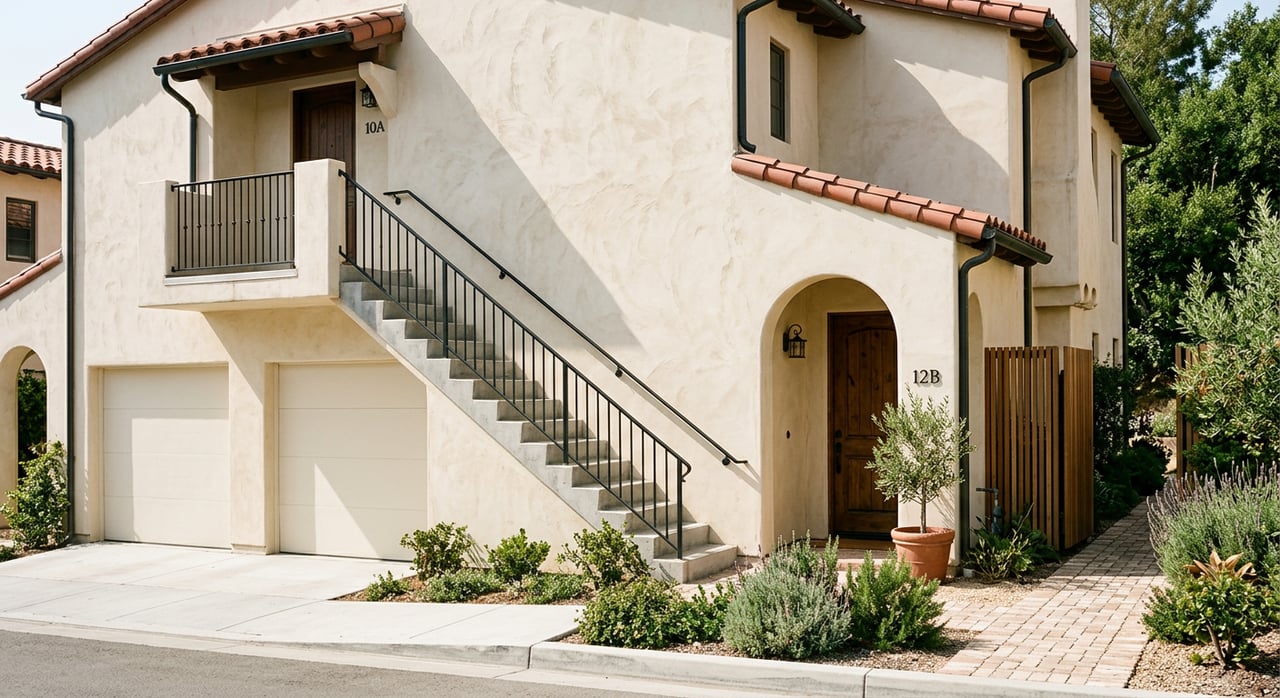
Picture your morning coffee on a sunny balcony with ocean air in San Clemente. If you are weighing a condo against a townhome, you are not alone. First-time buyers and downsizers often face the same question: which attached home style actually fits your budget, lifestyle, and long-term plans? In this guide, you will learn the practical differences that matter most in San Clemente, from ownership and financing to HOA coverage, coastal maintenance, parking, rentals, and neighborhood feel. Let’s dive in.
Condo vs. townhome basics
Choosing between a condo and a townhome starts with one key idea: the label you see online does not always match the legal reality. A condo is a legal ownership form that usually includes your interior space plus a share of common areas. A townhome is a building style that can be set up legally as a condominium or as a fee-simple lot in a planned-unit development. The legal form drives your financing options and maintenance responsibilities. You should always confirm it before you fall in love with a home. A helpful lender guide explains why the legal structure matters for loans and insurance on condos versus PUDs. You can review a concise summary in this condo and PUD guideline overview.
Why legal form matters for loans
If you plan to use FHA, VA, or certain conventional programs, a condominium project often needs project approval or single-unit approval before your lender can proceed. Fee-simple townhomes in PUDs generally do not face the same project-level hurdle. Ask your lender early whether a specific community is already approved or eligible for single-unit approval. For FHA specifics, see the agency’s condominium approval guidance.
What to verify on any listing
- Confirm the legal description in the deed or CC&Rs. Ask whether it is a condominium, site condominium, or fee-simple PUD.
- Ask your lender to check FHA, VA, and conventional eligibility for that exact community.
- Request the HOA documents up front so you can see maintenance and insurance responsibilities clearly.
HOA, maintenance, and insurance
Most San Clemente condo and many townhome communities are California Common Interest Developments governed by the Davis–Stirling Act. Associations must prepare and disclose reserve studies and budgets on a set schedule. Understanding reserves is critical for predicting future dues and special assessments. California Civil Code section 5550 requires regular reserve inspections and disclosures, which you can review in the Davis–Stirling summary.
What HOAs typically cover varies by legal form and community:
- Condos often include building exterior, roof, common landscaping, pools, and a master insurance policy. You usually cover interior finishes and personal property with an HO-6 policy.
- Townhomes in fee-simple PUDs may shift more exterior maintenance to you, with the HOA caring for shared amenities and landscaping. Always verify the division of responsibility in the CC&Rs and rules.
Insurance is a common blind spot. Master policies can be bare walls, single-entity, or all-in. That choice changes what you need to insure inside your unit and your risk for loss assessments. Ask the HOA for its insurance summary and master policy declaration page, then match your coverage accordingly. For an easy primer on HO-6 versus homeowners coverage, review this consumer insurance overview.
Coastal exposure and upkeep
San Clemente’s salt air is part of the charm, but it can accelerate corrosion of metal railings, fasteners, and building components. Waterfront and near-shore communities often plan more frequent painting, railing replacement, and roof cycles. That reality should show up in the reserve study and recent project history. For background on why sea-air environments demand more maintenance, see this coastal durability guidance from WBDG’s piers and wharves knowledge area.
Lifestyle by neighborhood
San Clemente offers distinct attached-home experiences depending on where you buy:
- Downtown, Pier, and Shorecliffs: You will find more coastal condos and multi-unit buildings near restaurants, the beach, and the Pier. Expect assigned subterranean or gated parking and often shared storage areas for boards and bikes. HOAs commonly include exterior upkeep and some utilities.
- Talega (inland hills): A planned community with many attached homes and townhomes, typically with two-car garages, pools, trails, and layered HOAs. You trade immediate beach access for more interior space, storage, and amenities. Explore the master association’s vibe and offerings at the Talega community site.
- Capistrano Beach and Rancho San Clemente: A mix of small condo complexes and attached homes with varied HOA setups. Treat each community individually.
San Clemente as a whole still skews single-family, which helps explain why attached inventory is limited yet meaningful. The city’s Housing Element shows roughly 57.7 percent single-family detached, 11.0 percent single-family attached, and 29.6 percent multifamily units. You can see the broader housing mix in the city’s Housing Element document.
Parking, storage, and rentals
Parking and storage are day-to-day factors that shape how you live:
- Coastal condos often have assigned spaces in gated or subterranean garages and shared storage for surf and sand gear. Some smaller buildings may offer a single covered space or a carport.
- Inland townhomes commonly include attached two-car garages and more private storage, which makes daily life simple if you have multiple vehicles or hobbies.
If you plan to rent your home, check two levels of rules:
- City rules: San Clemente regulates Short-Term Lodging Units with permits, operational standards, and Transient Occupancy Tax. Review the city’s ordinance for the basics on licensing and enforcement in this STLU ordinance PDF.
- HOA rules: Many associations set rental caps or minimum lease terms. Confirm these early, especially if you plan seasonal or executive rentals.
Transit and commute
San Clemente has two rail stops along the LOSSAN corridor: San Clemente Pier and San Clemente at North Beach. Amtrak Pacific Surfliner serves the Pier station daily. Metrolink service is more limited at the Pier and typically uses the North Beach station for weekday commuter patterns. Track conditions and schedules can change, so always verify current service. For a helpful local explainer on the stations and service nuances, see this overview on San Clemente’s scenic tracks and service.
Driving times to Irvine or central Orange County vary with I-5 traffic and time of day. Plan around a wide range and consider trial runs at your usual commute hour.
Price and HOA ranges at a glance
Citywide, the median owner-occupied home value is around $1,220,500, which blends all housing types. Attached homes inland often price below premium oceanfront condos, with waterfront and view units commanding a clear premium. HOA dues vary widely based on what they cover. Examples can range from a few hundred dollars per month in smaller inland communities to higher monthly dues in waterfront or amenity-rich buildings. Use these figures as a starting lens and confirm exact numbers with the latest HOA budget and ledger. For the median value baseline, reference the U.S. Census QuickFacts for San Clemente.
Touring checklist for San Clemente buyers
Use this list when you visit condos and townhomes. It will help you compare apples to apples.
- Legal form: Is it a condominium, site condominium, or fee-simple PUD? Ask to see the deed or legal description. A concise guide to condo vs. PUD is here: condo and PUD overview.
- HOA reserves and financials: Request CC&Rs, bylaws, current budget, year-to-date financials, and the latest reserve study. California requires regular reserve studies and disclosures, summarized in Civil Code 5550.
- Insurance scope: What does the master policy cover, and what must you insure? Ask for the master policy declaration page and the HOA’s insurance summary. For context on HO-6 and homeowners forms, see this insurance primer.
- Rentals: Are there rental caps, minimum lease terms, or short-term rental bans in the CC&Rs? Also review the city’s short-term lodging rules.
- Maintenance responsibility: Who maintains the roof, exterior, balconies, decks, patios, and garage doors? Clarify owner versus HOA obligations.
- Parking: How many assigned spaces are included, where are guest spaces, and are there permit or time limits?
- Coastal upkeep: Ask about recent exterior work, such as paint, railing replacements, or deck repairs. Salt air can increase maintenance. The WBDG’s coastal durability notes explain why.
- Financing eligibility: If you need FHA or similar financing, confirm whether the project is approved or eligible for single-unit approval. See FHA’s condo approval guidance.
Which option fits you best
If you prioritize walkability and beach access, a downtown or Pier-area condo can put you near restaurants, the trail, and the sand. Confirm parking, storage, and elevator access if you want fewer stairs. If you need more space, an attached garage, and quieter streets, an inland townhome in Talega or Rancho San Clemente may fit you better. You will likely drive to the beach, but daily routines can feel easier with more private storage and community amenities.
For first-time buyers, start with financing and project eligibility. For downsizers, focus on single-level layouts, elevator access, and insurance coverage details. In both cases, get the HOA documents early, review reserves closely, and verify how maintenance is split between owner and HOA.
Ready to compare real options in your price range and lifestyle? Reach out for tailored guidance, vendor referrals, and a smooth plan from search to closing. Connect with Jacqueline Screeton to get started.
FAQs
What is the key difference between a condo and a townhome for financing in San Clemente?
- A condo often requires project approval or single-unit approval for FHA and some loans, while fee-simple townhomes in PUDs usually do not; always ask your lender to verify eligibility for the exact community using FHA’s condo approval guidance.
What do San Clemente HOAs typically cover in condos versus townhomes?
- Condos often cover exterior elements and a master insurance policy, with owners carrying HO-6 for interiors; townhome coverage varies, and fee-simple PUDs can shift more exterior maintenance to owners, so confirm in the CC&Rs and the HOA’s insurance summary.
How do short-term rentals work in San Clemente condo or townhome communities?
- The city requires permits and sets operating rules and taxes for Short-Term Lodging Units, and many HOAs add rental caps or minimum lease terms, so check both the city’s STLU ordinance and the CC&Rs.
How does living near the beach affect maintenance and HOA dues?
- Salt air can accelerate corrosion and shorten exterior maintenance cycles, which can influence reserve planning and dues; ask about recent exterior projects and see WBDG’s notes on coastal durability.
Is rail commuting from San Clemente practical if I buy near the Pier?
- Amtrak Pacific Surfliner serves the Pier daily, while Metrolink is more limited at the Pier and uses the North Beach station for weekday service, so check current schedules and service notes outlined in this local rail overview.
